教你的 AI Agent 用 AIDA 做 Landing Page Analytics
AIDA 很老。新的工作流是在 AI agent 写 variants 之前,让它把 Attention、Interest、Desire 和 Action 映射到实时 landing-page analytics。

AIDA 很老。
这正是它有用的原因。
Attention、Interest、Desire、Action 不是神奇的文案公式。它是一种简单方法,用来问 landing page 在哪里漏:
- Attention — 合适的访客有没有注意到 promise?
- Interest — 他们有没有继续阅读或探索页面?
- Desire — 他们有没有围绕 proof、pricing、examples、integrations 或 fit 表现出意图?
- Action — 他们有没有点击、注册、预约、安装,或到达第一个产品价值事件?
经典框架不是升级点。
工作流才是。
在 2026 年,Claude Code、Codex、Cursor、Hermes、OpenClaw 和其他 agents 可以比 founder review 更快地产出 landing-page variants。这让再来一次 headline brainstorm 变得廉价。诊断才是稀缺的部分。
你的 agent 不应该一开始就写十个“更好”的页面。它应该先读取 live analytics,把页面映射到 AIDA,找出最弱的 stage,然后提出一个 stage-specific change 用于下一次测试。
这就是 Agent Analytics 的位置。
AIDA 很老;workflow 是新的
旧工作流是这样的:
learn AIDA → write copy → publish page → stare at conversionsAgent-native 工作流应该是这样:
install skill → read live analytics → map AIDA stages → find leak → change one thing → measure again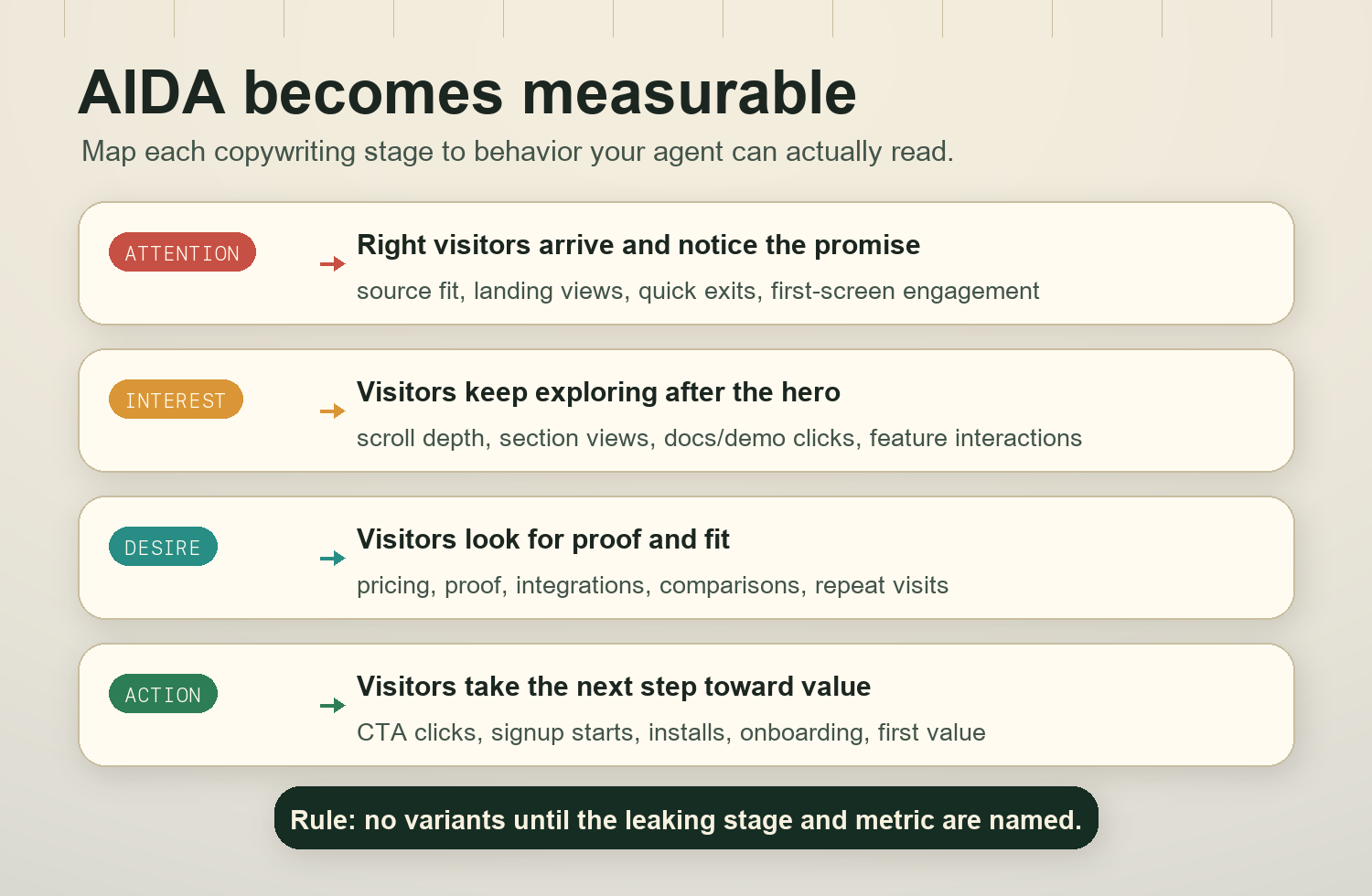
人类仍然负责 taste、positioning 和 risk。Agent 负责可重复的工作:
- 拉取最近的 page 和 event data,
- 检查 tracking 是否足够好,
- 把 landing-page signals 映射到 Attention、Interest、Desire 和 Action,
- 解释最大的 leak,
- 推荐一个可测量的下一步改动。
这会把 AIDA 从 copywriting trivia 变成 operating loop。
AI 让 variant generation 廉价,让 diagnosis 稀缺
如果你的 prompt 是“write me a better landing page”,你的 agent 大概率会照做。
它可能产出:
- 五个 headlines,
- 三个 hero sections,
- 一个更锋利的 CTA,
- 一个新的 testimonial block,
- 一个 pricing-section rewrite,
- 一个更长的 FAQ。
其中一些可能不错。但没有诊断,工作就是随机的。
有 Attention leak 的页面不需要更长的 feature section。它需要更清晰的 first screen、更好的 source-message match,或 traffic-quality fix。
有 Interest leak 的页面不需要更激进的 CTA。它需要下一段回答访客真正的问题。
有 Desire leak 的页面不需要更聪明的文案。它需要 proof、specificity、comparison、pricing clarity、integration detail、risk reversal,或证明产品适合这个访客的证据。
有 Action leak 的页面不需要再加一段文字。它需要减少 intent 和下一步之间的摩擦。
核心规则是:
Do not ask your agent for variants until it names the leaking AIDA stage.把 AIDA 映射到可测量 signals
AIDA 不是 dashboard tab。你的 agent 必须把它翻译成你网站上可用的 signals。
把这个 mapping 当作起点:
| AIDA 阶段 | 在 landing page 上意味着什么 | 有用的 Agent Analytics signals |
|---|---|---|
| Attention | 合适的人到达,并注意到 promise | sessions by source、landing page views、bounce 或 quick exits、first-screen engagement、campaign 或 referrer quality |
| Interest | 访客在 hero 后继续探索,而不是离开 | scroll depth、section visibility、time-on-page、docs clicks、demo clicks、feature-section interactions、navigation to related pages |
| Desire | 访客寻找产品适合其情境的 proof | pricing clicks、case-study clicks、integration clicks、comparison-page clicks、security 或 docs depth、repeat visits、high-intent section engagement |
| Action | 访客采取下一步并到达价值 | CTA clicks、signup starts、lead forms、install events、onboarding completion、first activation event、trial-to-activation quality |
你的具体 events 会不同。没关系。
重要的是,agent 在判断页面前要写下 mapping。否则它会优化最容易找到的指标。
好的 AIDA diagnosis 应该像这样:
Attention is acceptable from organic search and direct, weak from paid social. Interest is weak because 71% of visitors leave before the proof section. Desire is inconclusive because pricing and integration events are under-instrumented. Action is low, but likely downstream of the Interest leak. Next test: move integration proof and one concrete outcome into the second section, then measure scroll-to-proof and CTA click rate from visitors who reached it.
这比下面这样好得多:
Try a punchier headline.
安装 Agent Analytics skill
这篇博客教你 operating model。Skill 教你的 AI agent 如何在它正在工作的 codebase 或 project 中使用 Agent Analytics。
安装公开的 Agent Analytics skill:
npx --yes skills add agent-analytics/skills --skill agent-analytics --agent codex -y --copy如果你想先检查 package,列出可用 skills:
npx --yes skills add agent-analytics/skills --list然后在你的 agent environment 中打开项目,让 agent 在诊断页面前验证三件事:
- Agent Analytics tracking 已安装在 landing page 上。
- CTAs、signup 或 lead submission,以及第一个有意义的 activation event 有重要 events。
- Project context 包含持久的产品事实:target audience、main promise、activation definition、important CTAs 和 recent page changes。
如果其中一个缺失,第一项任务是 instrumentation 或 context cleanup,而不是 copywriting。
让你的 AI agent 运行 AIDA recipe
把这个 prompt 复制到 Claude Code、Codex、Cursor、Hermes、OpenClaw,或任何已安装 Agent Analytics skill 的 agent 中:
Use the Agent Analytics skill to run an AIDA diagnosis for this landing page using the last 14 days of live analytics. Map Attention, Interest, Desire, and Action to the available events and page signals. Identify the weakest stage, explain the evidence and caveats, and recommend one stage-specific change to test next. Do not write copy variants until you have named the leaking stage and the metric that will judge the change.如果你已经知道页面最近发生过变化,加上这个:
Before comparing results, check project context and annotations for recent landing-page, pricing, onboarding, or tracking changes. If the data crosses a major change, split the readout before and after that date.如果你的 agent 试图直接跳到 copy,阻止它,并先要求 measurement map:
Use the Agent Analytics skill to compare landing-page CTA clicks, signup or lead events, and activation quality before recommending any AIDA copy variants. Show which events represent Attention, Interest, Desire, and Action, and flag missing instrumentation.输出应该无聊但有用:
- time window,
- page 或 pages included,
- AIDA stage mapping,
- weakest stage,
- 关于 sample size 或 missing events 的 caveats,
- 一个 recommended change,
- 判断改动是否有效的 metric。
每个 leaking stage 应该改什么
一旦 agent 识别了 leak,改动就应该匹配 stage。
如果 Attention 正在漏
症状:
- traffic arrives but leaves quickly,
- certain sources perform much worse than others,
- hero does not match the search query、campaign 或 referring promise,
- first-screen engagement is low。
Ask your agent to test:
- 更清晰地命名 audience 和 outcome 的 headline,
- 针对 top source 或 campaign 的 message match,
- 更快展示 product category 的 hero section,
- first-screen proof point,而不是抽象 positioning,
- 如果来错了访客,清理 source。
Measurement:
- first-screen engagement,
- quick-exit rate,
- scroll past hero,
- 按 source 看 CTA visibility 和 click rate。
不要通过在 fold 下面添加更多 sections 来修 Attention。访客必须先在意,才会滚动。
如果 Interest 正在漏
症状:
- 访客越过 hero,但没有到达重要 sections,
- docs/demo/feature clicks 很弱,
- scroll depth 在产品解释清楚前下降,
- 访客没有与下一段 proof 或 explanation block 互动。
Ask your agent to test:
- 更快回答“how does this work?” 的第二段,
- 减少抽象 benefits,增加具体 use cases,
- 更清晰的 product walkthrough,
- old workflow 与 new workflow 的 comparison,
- 匹配 visitor intent 的 docs、examples 或 demo paths 内链。
Measurement:
- scroll to the explanation/proof section,
- section engagement,
- docs/demo clicks,
- interested users 的 return visits。
Interest 通常是 AI-generated pages 变得光滑但空薄的地方。访客不断问“这到底是什么?”,页面却一直用形容词回答。
如果 Desire 正在漏
症状:
- 访客阅读了,但没有表现 high intent,
- pricing、case-study、integration、security 或 comparison clicks 很弱,
- CTA clicks 有,但 signup quality 差,
- 页面没有回答 risk、fit、proof 或“why now?” 问题。
Ask your agent to test:
- 绑定 target user 真实情境的 proof,
- 一个简短 case example 或 before/after workflow,
- integration 和 setup details,
- pricing 或 plan clarity,
- CTA 附近的 objection handling,
- 只有在真实且当前有效时才使用 screenshots 或 examples。
Measurement:
- pricing 或 proof-section engagement,
- integration/docs clicks,
- proof exposure 后的 CTA clicks,
- signup-to-activation quality,
- high-intent sources 的 repeat visits。
Desire 不是 hype。它是访客相信产品可能适合自己的证据。
如果 Action 正在漏
症状:
- 访客表现出 interest 和 desire,但没有完成下一步,
- CTA clicks 高,但 signup 或 lead completion 低,
- signup starts 没有变成 activation,
- action path 有不必要的选择或摩擦。
Ask your agent to test:
- 一个 primary CTA,而不是相互竞争的 CTAs,
- 说明下一步会发生什么的 button copy,
- 更低摩擦的 signup 或 handoff,
- 更少 fields,
- 更好的 post-click onboarding,
- 保留 landing-page promise 的 next-step page。
Measurement:
- CTA click to signup start,
- signup start to completion,
- install 或 setup completion,
- first activation event,
- 按 landing-page source 看 activation quality。
Action 不只是点击按钮。对 AI-builder product 来说,有用的 action 通常是第一次产品价值时刻。
7 天 AIDA loop
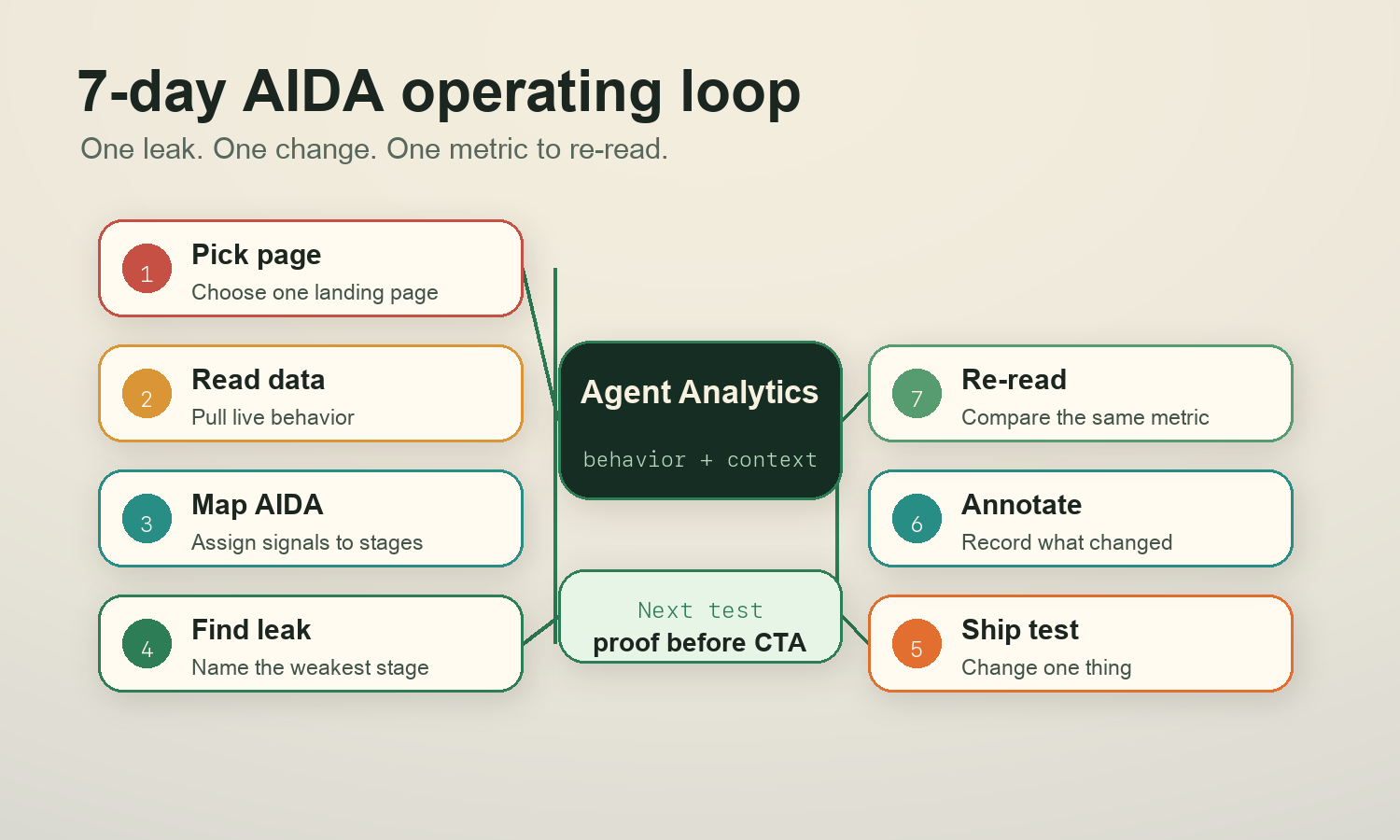
不要把它变成季度 CRO ceremony。
每周运行:
- 选择本周重要的 landing page 或 campaign page。
- 让 agent 把 AIDA 映射到 live signals。
- 找出最弱的 stage。
- 为该 stage 选择一个改动。
- Ship 这个改动。
- 在 project context 中 annotation 这次改动。
- 在有足够 traffic 后重新读取同一个 stage signal。
Annotation 很重要。如果 agent 看不到页面何时变化,它会混合新旧数据并夸大结论。
每周 operator prompt/checklist
每周使用这个:
Use the Agent Analytics skill to run the weekly AIDA landing-page check for this project.

Checklist:
1. Confirm the landing page, date window, and any recent page or tracking annotations.
2. Map available analytics to Attention, Interest, Desire, and Action.
3. Identify the weakest stage using evidence, not vibes.
4. Flag missing or low-confidence instrumentation.
5. Recommend one stage-specific change for the next 7 days.
6. Name the exact metric or event that will decide whether the change worked.
7. Draft the smallest implementation plan, but do not broaden the test into multiple unrelated changes.
最好的输出不是完整 redesign。
而是一个可测量的下一步动作。
来源附录
- E. K. Strong, The Psychology of Selling and Advertising (1925). Strong popularized the AIDA sequence in sales and advertising education, building on earlier attention-interest-desire-action formulations often associated with E. St. Elmo Lewis.
- E. St. Elmo Lewis, early advertising and sales writing on attracting attention, maintaining interest, creating desire, and getting action. The exact origin history is messy, but AIDA is widely treated as a classic sales/copy funnel rather than a modern analytics model.
- Google Analytics documentation on events and enhanced measurement. Useful for thinking about page views, scrolls, outbound clicks, form interactions, and conversion events as measurable behavior rather than copy opinions.
- Nielsen Norman Group research and UX writing on scrolling, information scent, and user attention. Useful reminder that visitors decide quickly whether the next section is worth their effort.
- Agent Analytics skill install path:
npx skills add agent-analytics/skills. The skill-backed workflow in this post assumes the agent can read project analytics, inspect or improve event instrumentation, use project context, and summarize the next measured change.