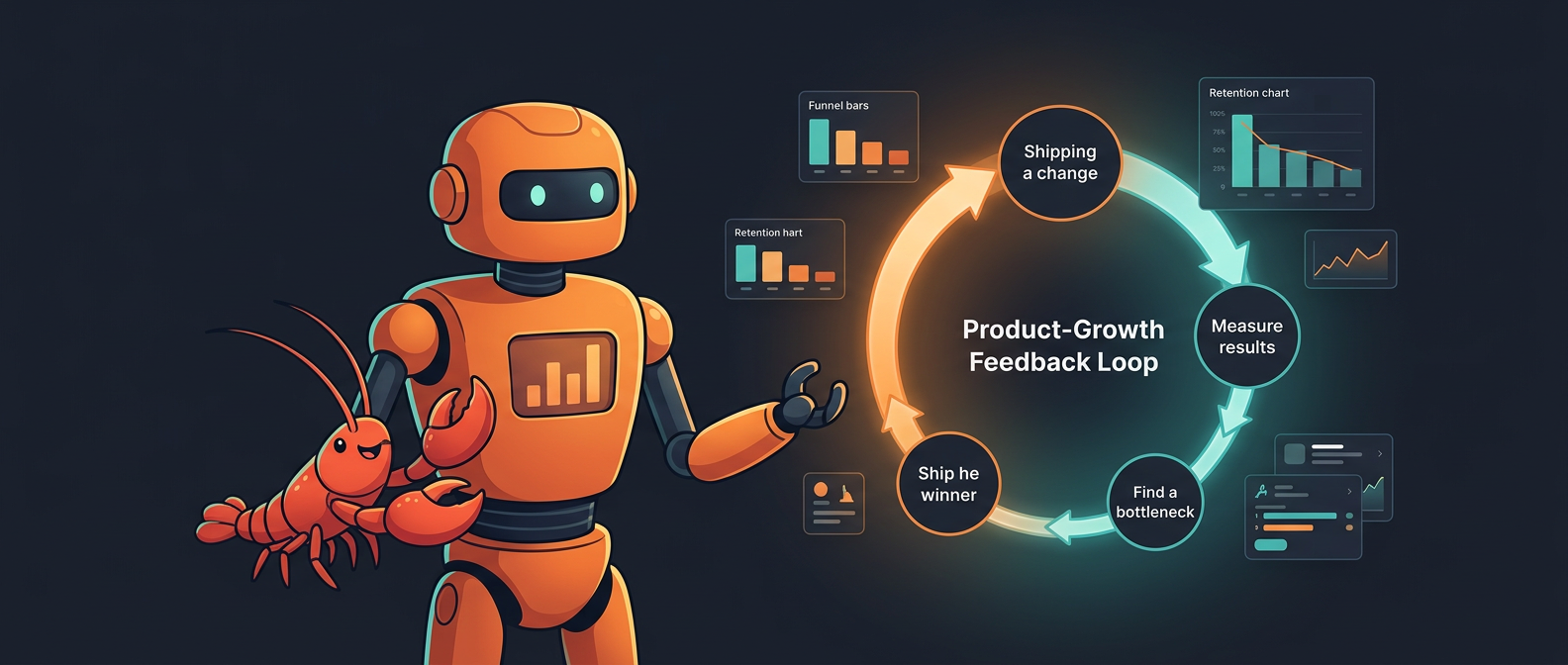
🦞 AARRR for Solo Builders: Let Your AI Agent Run Your Pirate Metrics
Use Agent Analytics with OpenClaw, Claude Code, Cursor, Codex, or any coding agent to diagnose which part of your growth loop is broken.
Most indie hackers know two numbers:
- traffic
- signups
And that’s usually where measurement stops.
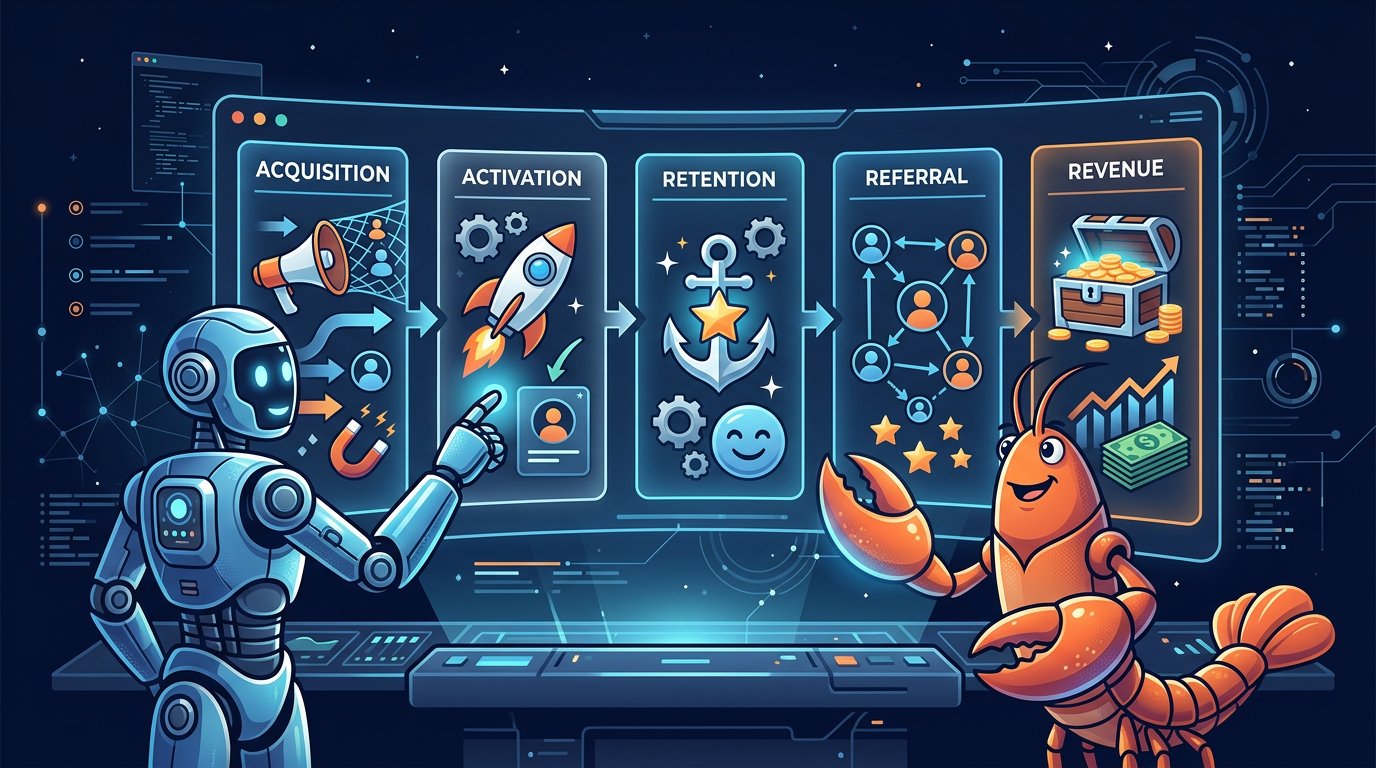
AARRR fixes that by splitting growth into five stages:
- Acquisition — how people find you
- Activation — whether they reach the first meaningful moment of value
- Retention — whether they come back after that first experience
- Referral — whether they share the product or bring in others
- Revenue — whether the business actually captures value
For solo builders, AARRR is useful because it turns vague growth anxiety into a concrete diagnosis.
Instead of staring at traffic and guessing, you can ask:
- Are the right users arriving?
- Are they reaching value?
- Are they coming back?
- Are they bringing others?
- Are they paying?
In an agent-native workflow, your AI coding agent should be able to answer that every week — whether you use OpenClaw, Claude Code, Cursor, Codex, Windsurf, or another tool that can query analytics programmatically.
Why AARRR still matters
Most indie projects track pageviews, maybe clicks, maybe signups.
That gives you the shape of attention, but not the shape of the business.
Examples:
- High traffic, low activation → landing page or onboarding problem
- Good activation, bad retention → product value problem
- Strong retention, weak revenue → monetization problem
- Good acquisition and activation, no referral → no sharing loop
AARRR gives structure to diagnosis.
Why it gets better with AI agents
What changes in 2026 is not the framework. It’s the workflow.
Your AI agent can now:
- gather the data,
- summarize each stage,
- identify the bottleneck,
- recommend the next move.
That’s where Agent Analytics fits.
The value is not “five metrics on a dashboard.” The value is that your agent can turn those five stages into a weekly operating brief.

How to map AARRR into Agent Analytics
Acquisition
Track:
- page views
- referrers
- UTMs
- landing page sessions by source
Activation
Signup is not always activation.
For Agent Analytics, activation might be:
signup_completedproject_created- first snippet installed
- first real tracked event received
Retention
Track:
- return sessions
- repeat key action
- cohort return by week
Referral
If your product has any natural share or invite loop, instrument it.
Track:
- invite sent
- invite accepted
- referred signup
- share action
Revenue
Track:
- subscription started
- upgrade
- purchase
- paid conversion rate
What to ask OpenClaw
Use concrete prompts, not vague ones.
Weekly summary
Give me an AARRR summary for the last 7 days across all projects. Show Acquisition, Activation, Retention, Referral, and Revenue. Highlight the weakest stage and one recommended next action.
Activation diagnosis
Check which projects have the biggest drop-off between signup_completed and project_created in the last 7 days. Rank them and tell me where activation looks broken.
Retention check
Compare week-1 retention by acquisition source for the last 30 days. Tell me which channel brings users who actually come back.
Revenue check
Show me which acquisition sources produce paying users, not just signups.
One-project operator brief
For project X, give me an AARRR breakdown for the last 14 days and tell me which stage I should improve next.
What your weekly AARRR brief should look like
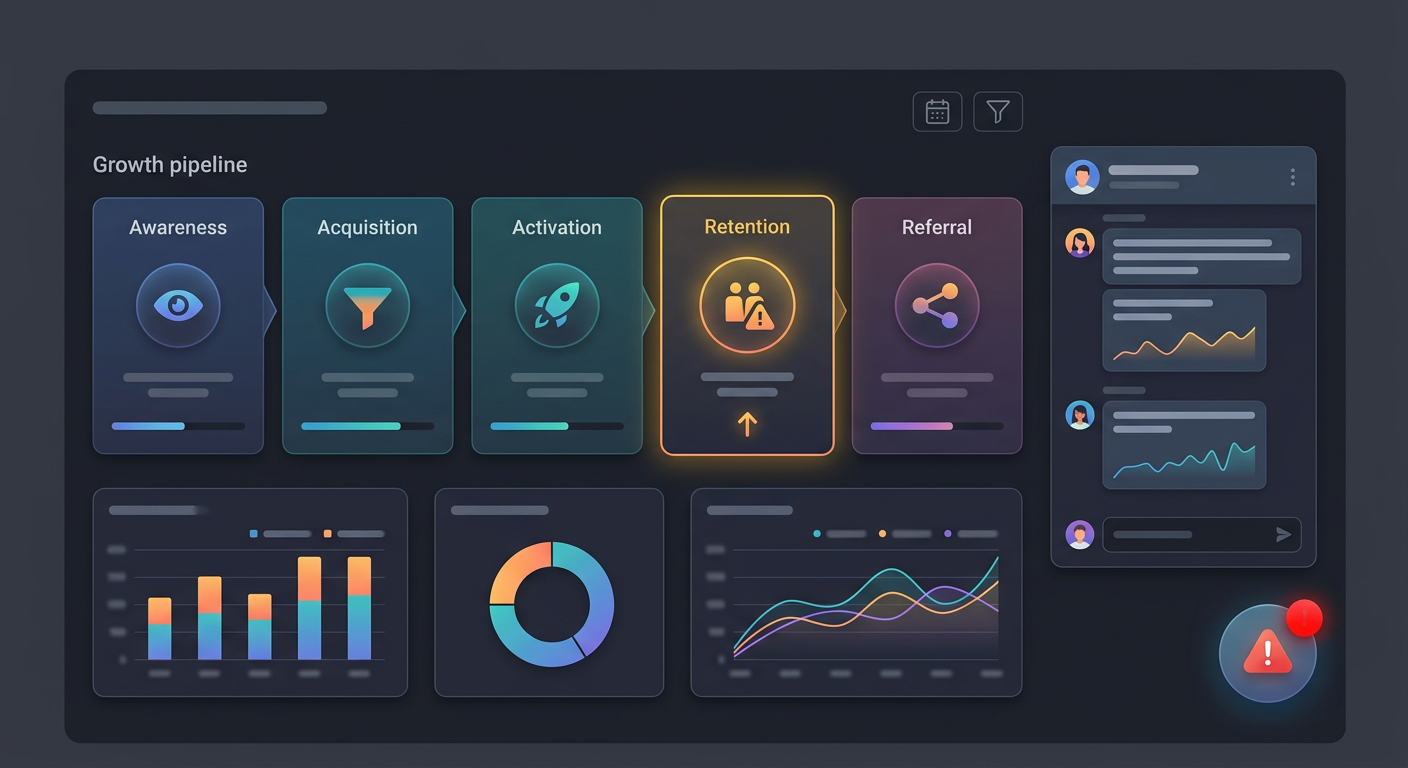
Every Monday, your AI agent should be able to send something like this:
- Acquisition: organic search up 18%, Reddit flat
- Activation: signup rate healthy, but only 42% created a project
- Retention: week-1 return rate down vs last week
- Referral: almost no invite behavior yet
- Revenue: no change in paid conversion
- Diagnosis: activation is the weakest stage
- Action: improve onboarding and instrument first-value step more clearly
That is much more useful than “you got 1,243 pageviews.”
Common mistakes
- Treating signup as activation
- Ignoring retention because the project is early
- Tracking referral before the product has value
- Looking only at top-line counts
- No next action tied to the weakest stage
Final framing
AARRR is useful because it forces discipline.
Instead of asking:
- How much traffic did we get?
you ask:
- Where is the growth loop weak?
- What stage should we improve next?
Bullseye helps your agent choose channels. AARRR helps your agent diagnose the loop after users arrive.
Read the previous post: The Bullseye Method for Technical Indie Hackers