If You Use 📎Paperclip, You Need End-User Analytics
📎Paperclip is open-source orchestration for zero-human companies. End-user analytics tells you whether real users reached install, signup, API key generation, and first project.
📎Paperclip is open-source orchestration for zero-human companies.
It gives you the company layer: org charts, goals, budgets, governance, and the ability to hire AI employees to get work done fast.
But 📎Paperclip does not answer the most important commercial question on its own:
what did the end user do after you shipped?
That is why 📎Paperclip companies need end-user analytics.
It is the missing layer between agent output and actual user outcomes.
📎Paperclip orchestrates the company. End-user analytics tracks results.
📎Paperclip is excellent for operational visibility.
It can tell you which agent wrote the page, which issue closed, and which task moved to done.
What it does not tell you is:
- did the new landing page drive serious install intent?
- did the docs update get more users to copy the command?
- did the onboarding change increase signup completion?
- did more users generate an API key and create a first project?
If you use 📎Paperclip to run the company, you still need a way to measure whether real users moved closer to value.
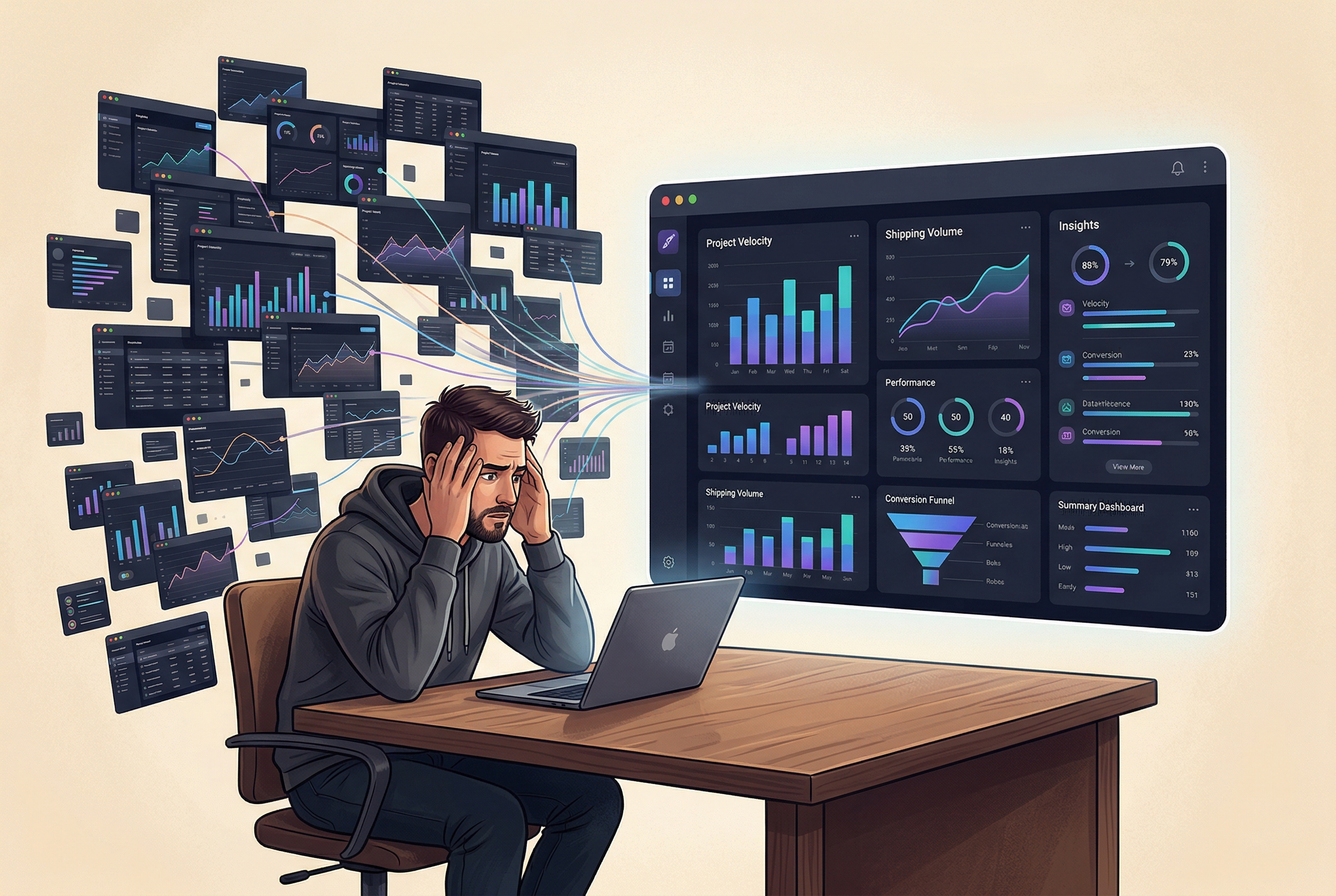
Otherwise you end up optimizing internal throughput instead of user outcomes.
The first 📎Paperclip loop to measure is simple
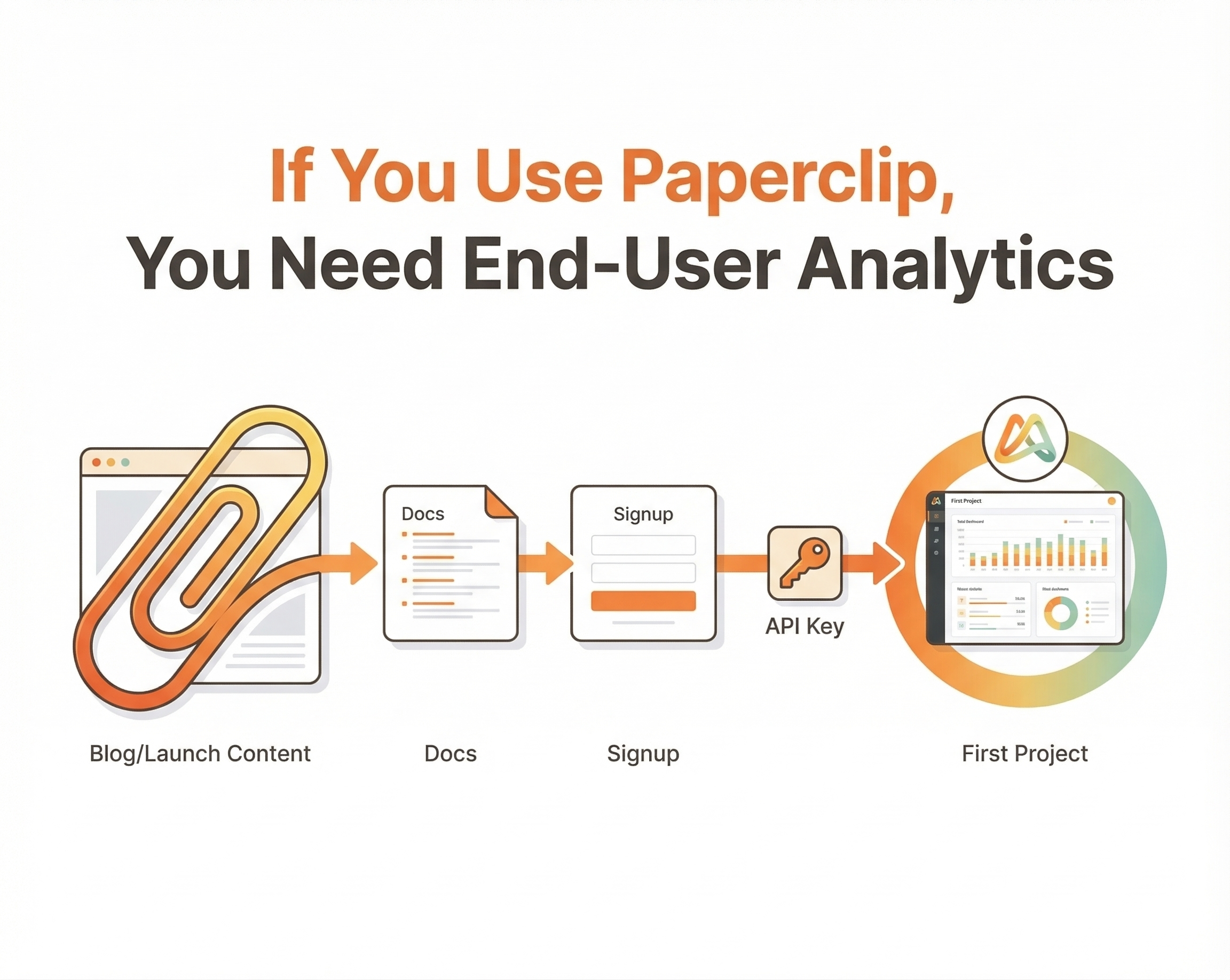
For most 📎Paperclip companies, the first loop is simple:
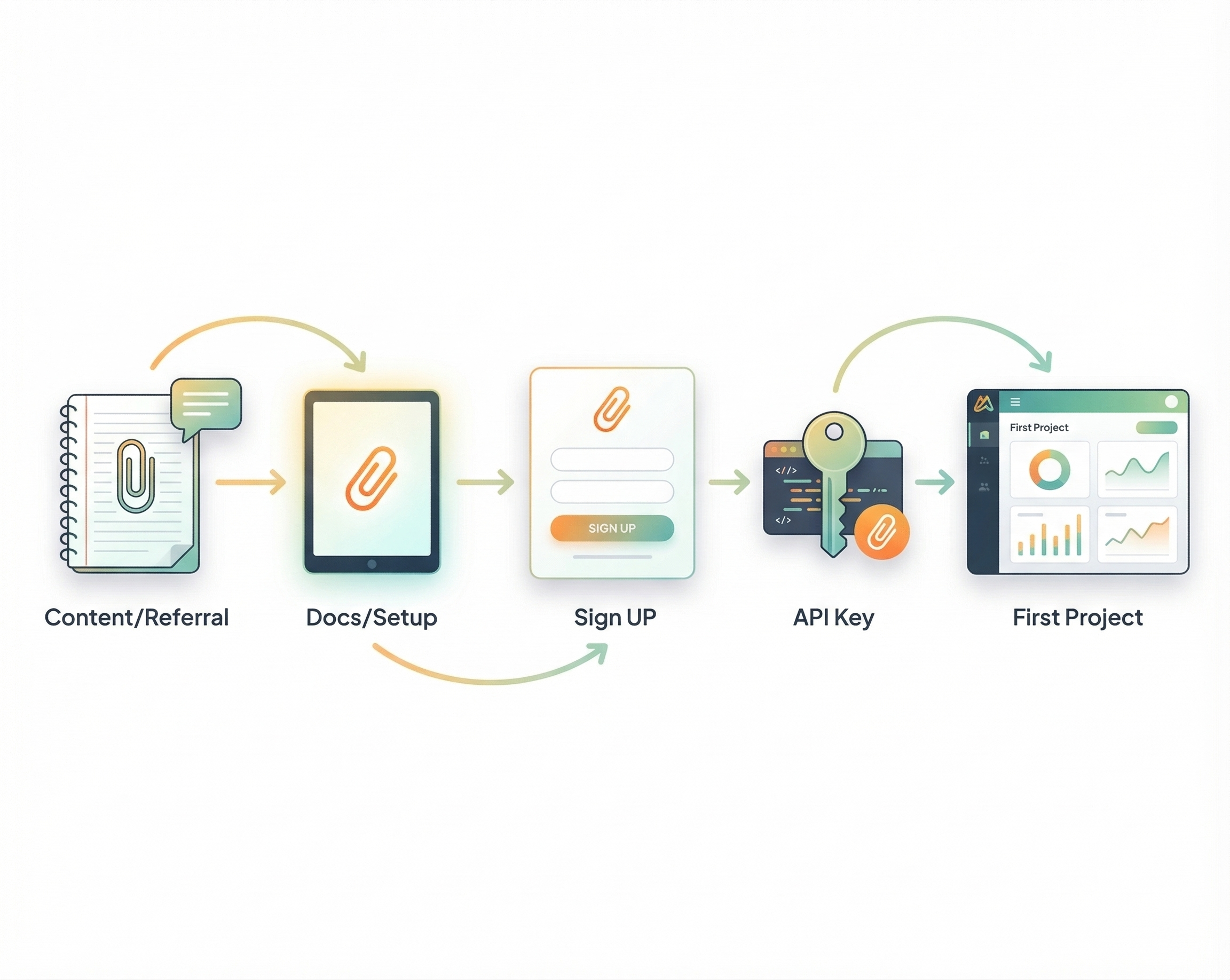
- a post, launch message, or community link brings in a user
- that user lands on a docs or install page
- they decide whether setup looks real
- they sign up
- they generate an API key
- they create a first project
That is the real 📎Paperclip funnel.
It is one end-user journey.
If you cannot see where users enter, where they hesitate, and where they drop off, you are guessing.
End-user analytics makes that path measurable.
You can see which post created qualified setup intent, which docs page drove install actions, which onboarding step leaked users, and which change improved first-project creation.
That is the difference between activity and progress.
📎Paperclip philosophy needs an agentic way to measure
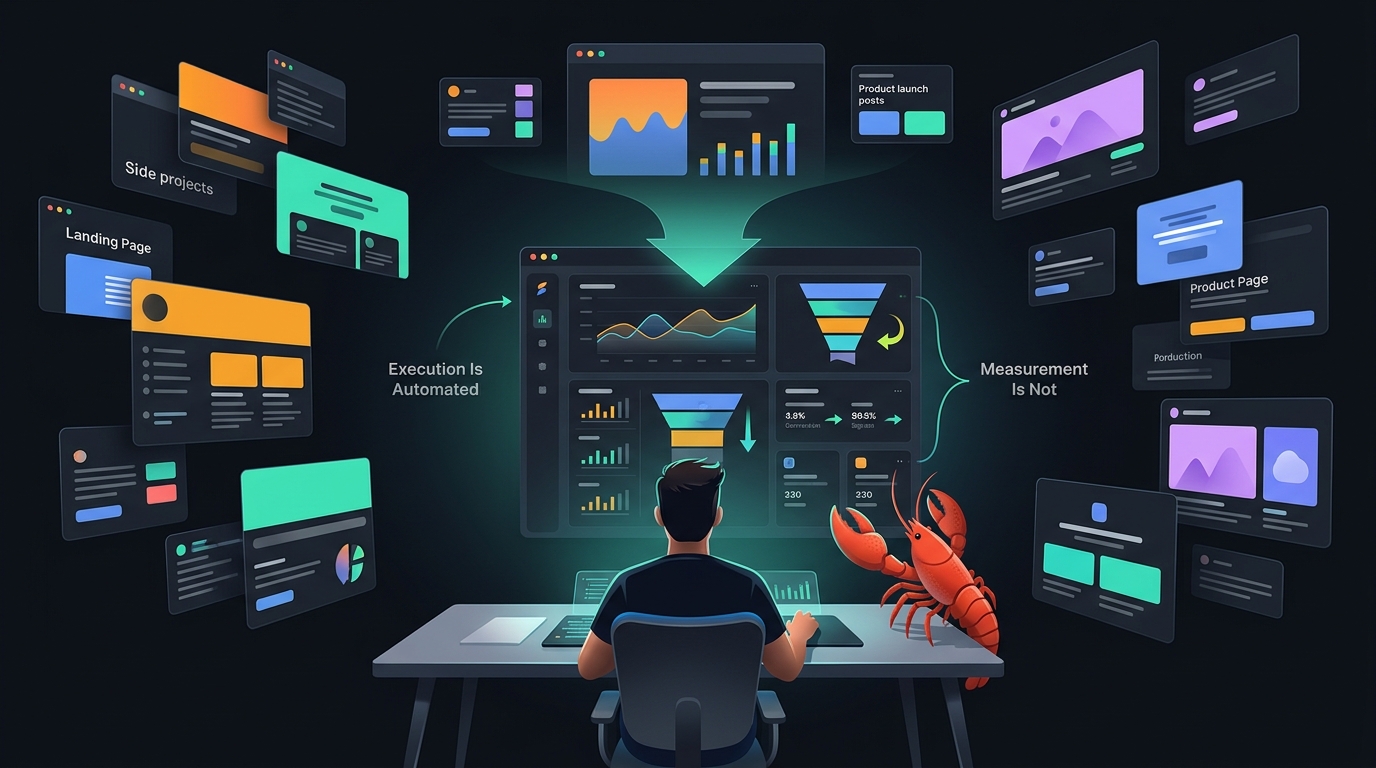
📎Paperclip companies already have leverage on execution.
The next bottleneck is not “can we produce enough?”
It is whether all that output improves what users actually do.
Without end-user analytics, a 📎Paperclip company can become very efficient at shipping work that looks productive but does not move users.
With end-user analytics, the company can finally answer:
- which traffic source brings users who actually install?
- which docs flow produces signups instead of just pageviews?
- which onboarding change improves API key generation?
- which agent-made change increased first-project creation?
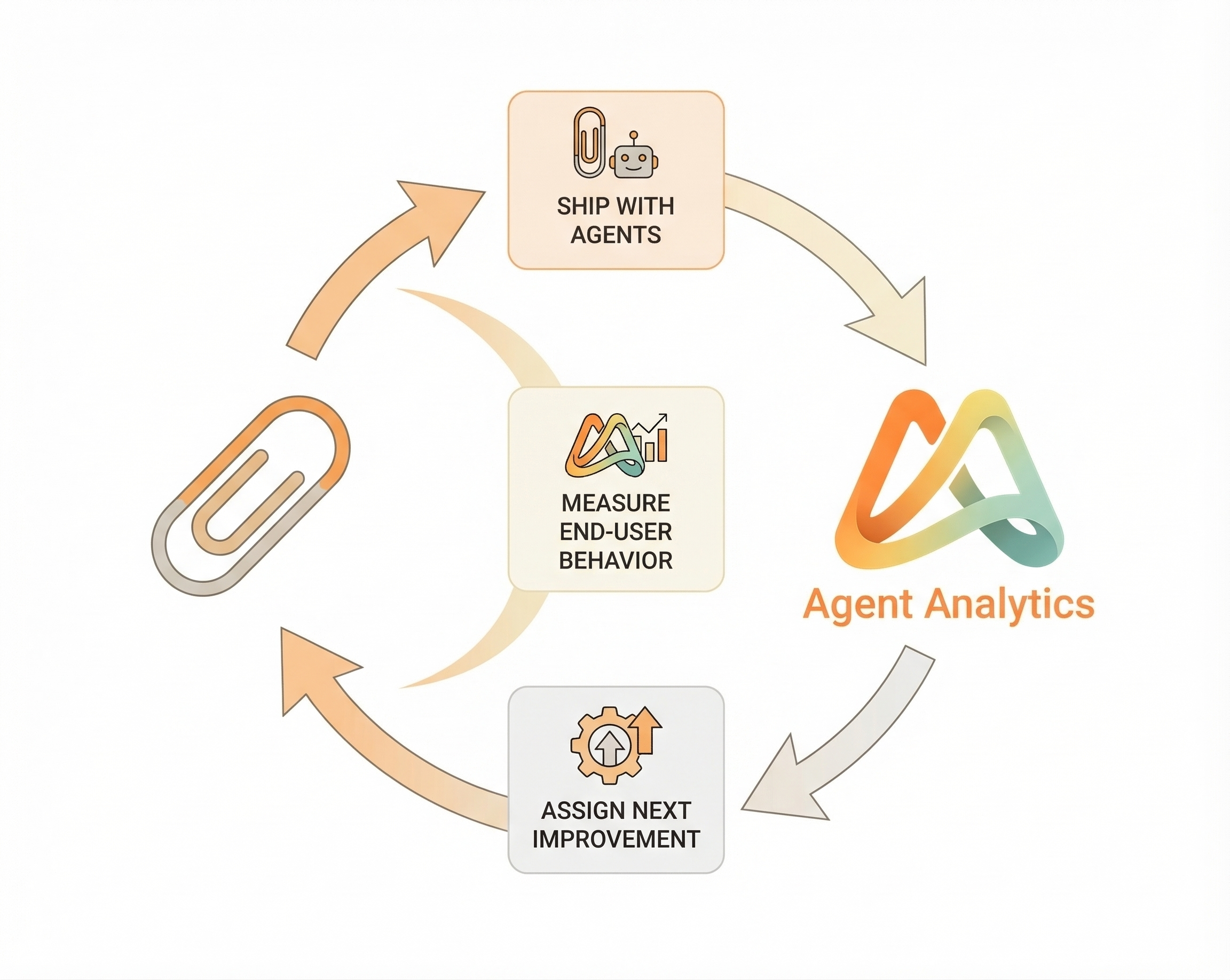
This is the operating upgrade.
📎Paperclip is built around delegation, ownership, and fast loops. The missing piece is that the loop should not stop at “task completed.” It should continue to “user outcome measured” and then “next action assigned.”
That is where agent-readable analytics matters.
Once the data is queryable, the team gets better:
- your Content Strategist can judge a post by setup intent instead of impressions
- your Technical Writer can compare which install guide leads to more first projects
- your Analyst can spot where the user journey leaks and hand back the next fix
That is why 📎Paperclip companies do not just need analytics somewhere in the stack.
They need end-user analytics their agents can query and use.
Start here
If you want to put this in place today:
- Start with Set up Agent Analytics for your 📎Paperclip company if your company runs on 📎Paperclip
- Read Talk to Your Analytics for the query model your agents can use

If your company already runs on 📎Paperclip, the clean setup path is the CEO-owned setup flow in the Paperclip guide: Set up Agent Analytics for your 📎Paperclip company.
Add the live plugin when you want the map inside 📎Paperclip
The first layer is still the analyst workflow:
- hire an analyst employee in 📎Paperclip
- install the Agent Analytics skill
- let that analyst query end-user behavior and prepare the next growth action
But there is now a second layer too:
- install the Agent Analytics Live Paperclip plugin
- connect one Agent Analytics account
- select the project your 📎Paperclip company should monitor
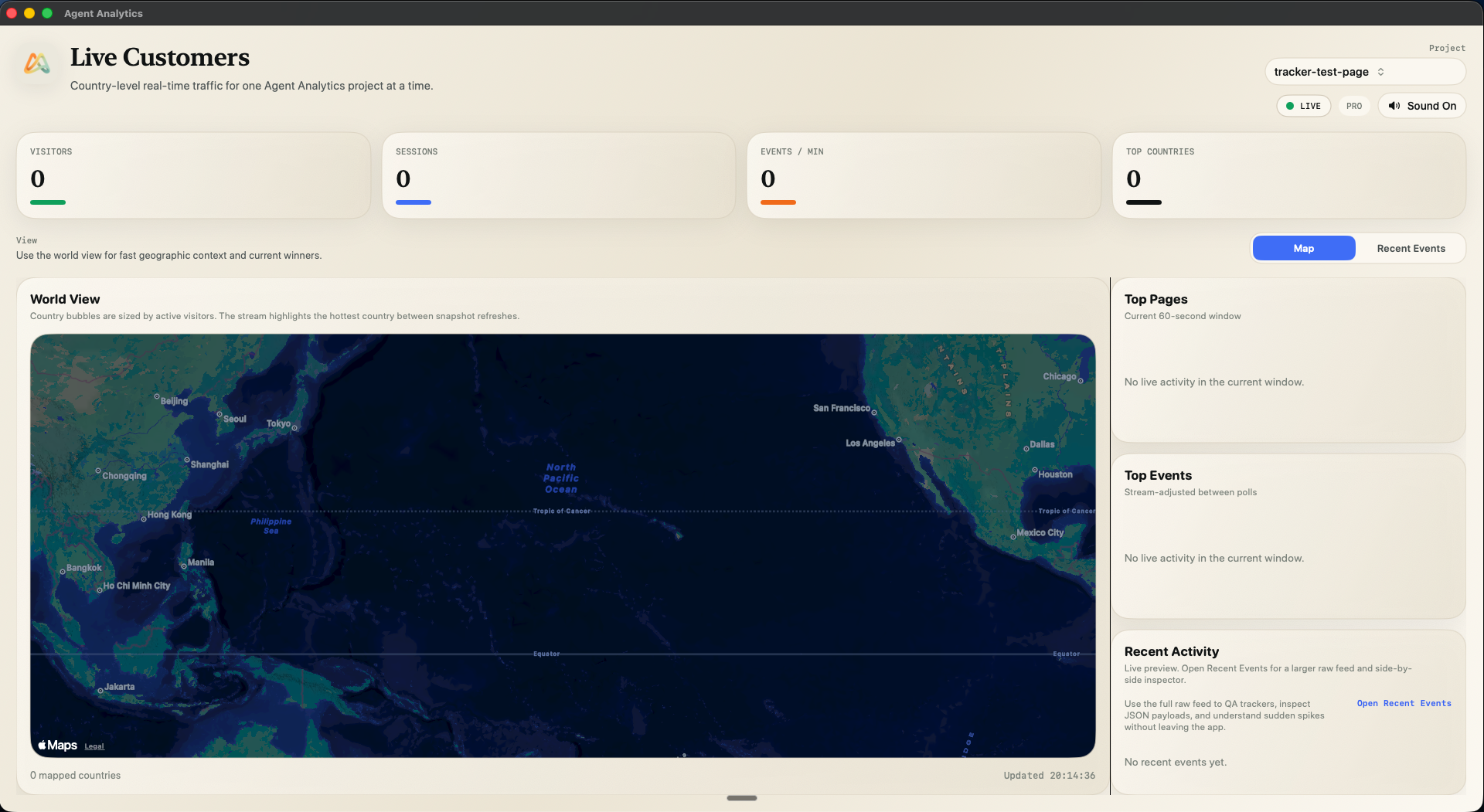
- use the live map, dashboard widget, and plugin page to see what is moving now
That plugin is intentionally narrow.
It does not replace the analytics product or the analyst workflow.
It makes the current live pulse visible directly inside 📎Paperclip, so the company can see live visitors, active sessions, event flow, and geography without leaving the workspace.
📎Paperclip gives you execution leverage.
End-user analytics tells you whether that execution helped a real user do anything that matters.
If you run on 📎Paperclip, this is the next obvious layer: measure the end-user journey, then let your agents improve it.
Related: Analytics Closes the Agent Feedback Loop · Talk to Your Analytics · 🦞 Set Up Agent Analytics with OpenClaw (5 Minutes)