YC Is Right About AI-Native Startups. They Need Closed-Loop Analytics.
YC's AI-native company advice points to one practical operating model: measurable surfaces, project context, portfolio context, and analytics your existing AI agents can use when deciding what to do next.
Following Diana Hu and YC’s advice on building AI-native startup companies, the direction is clear: AI should be the operating system, the company should be queryable, every important process should become a closed loop, human middleware should shrink, and startups should optimize for builder-operators and tokens, not headcount and reporting layers.
They are right.
But how do you actually do that?
The practical takeaway is simple:
AI-native companies should run on AI-native-first analytics.
Every product, surface, and asset the company ships should be measurable and usable by the same agents helping build the company.
Analytics is not the whole closed loop, but it is the part that measures shipped outcomes and artifacts so agents can learn what worked.
AI-native companies are made of many surfaces
Today’s company surfaces include landing pages, launch posts, blog posts, docs, guides, public GitHub repos, demos, benchmarks, onboarding flows, integrations, proof pages, community index sites, case studies, and more.
Each surface has a job: discovery, education, credibility, intent, conversion, or activation.
That means each surface needs context: goals or its role in the growth loop, activation events, a glossary, important product changes, and learnings.
Portfolio context stores the shared growth system and the connections between surfaces.
Together, project and portfolio context make the company legible to AI-operated closed loops.
Analytics context should decide where attention belongs
The point is not that the agent already knows to improve onboarding, rewrite a launch post, or change a docs page.
Analytics context should help Claude Code, Codex, Cursor, Hermes, or the agent already building the company decide where attention belongs in the first place.
If activation is leaking in setup, the company’s AI agents should see where, whether it matters, and whether an earlier fix helped.
If one launch surface brings qualified users and another does not, they should know before writing the next post.
If docs, guides, landing pages, community index sites, and the app all participate in the same path, the agent should know which surface educates, which captures intent, which converts, and which milestone counts as real progress.
This is what “closed loops everywhere” should mean in practice:
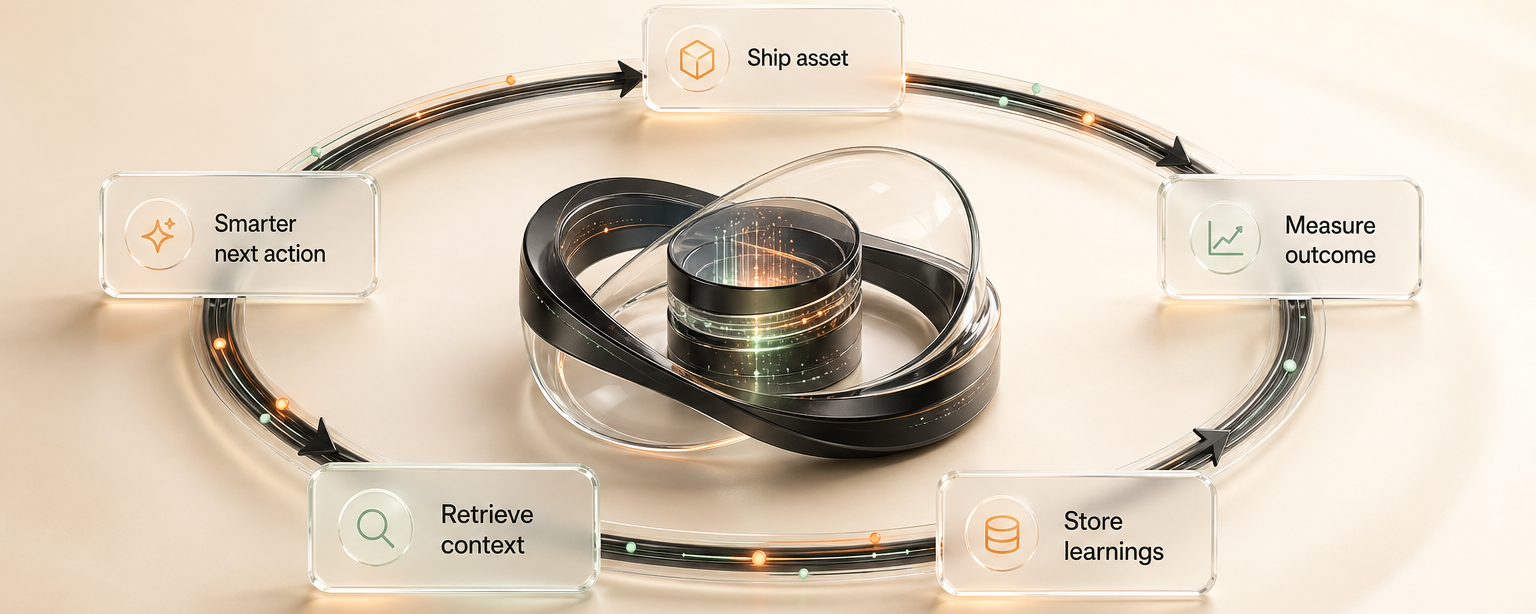
ship asset → measure outcome → store learnings → retrieve them at the right time → take a smarter next action → repeatAgent-friendly analytics makes the loop run smoothly
To run closed-loop companies smoothly, teams need an agent-friendly, AI-first analytics platform that makes the company’s AI agents smarter every closed-loop cycle.
Agent Analytics is built around this operating model.
The skill guides Claude Code, Codex, Cursor, Hermes, OpenClaw, Paperclip, NanoClaw, or the agent already building the company to keep analytics context compact, structured, and retrievable.
Project context keeps each surface honest.
A docs site might be measured by qualified setup clicks. A free tool might be measured by intent capture. The product app might be measured by activation and retention.
Portfolio context keeps the system connected.
A launch post, docs page, free tool, community index site, and product app can all be part of the same growth path. The agent should not have to relearn that every session.
It should be able to ask:
- which surface brought qualified users?
- which asset created trust?
- which setup step blocked activation?
- which agent output got accepted?
- which workflow proved value?
- what should change next?
And the answer should arrive with the product meaning attached.
Project context and portfolio context are the memory layer
The important detail is that context should be compact and structured, not a giant memory dump.
Project context is for per-surface truth: activation definitions, event meanings, stable goals, product changes, and human corrections that should survive the current chat.
Portfolio context is for the shared growth system: how the landing page, docs, free tools, community surfaces, product app, and related projects work together.
If you want the deeper product-context version of this argument, read Your Product Isn’t One Website Anymore. For the setup details, the Agent Analytics docs cover how the skill keeps project and portfolio context and the CLI reference explains portfolio context configuration.
Related context:
- Your Product Isn’t One Website Anymore explains Project Context, Portfolio Context, and why one product is now usually a multi-surface growth system.
- If You Use Hermes to Handle Your Projects, You Need Agent-Readable Web Analytics shows how this loop works inside an agent runtime that already handles projects and context.
- Stitch Users Across Sites explains why cross-surface user journeys need to stay connected when a visitor moves between sites, docs, apps, and related domains.
- Analytics Closes the Agent Feedback Loop covers the earlier version of the core loop: the agent acts, observes, and improves from real user behavior.
Builder-operators need analytics memory, not more reporting
The YC framing around builder-operators is important.
The agent is not just a report reader. It is helping inspect surfaces, propose growth bets, make changes, verify deploys, query outcomes, and suggest the next test.
The human still owns judgment. The human approves direction, taste, and risk.
But the agent should not need a human to manually translate every analytics read into the next prompt.
That is the reason to store project and portfolio context beside the analytics data.
Save what should survive the current chat:
- activation definitions
- event meanings
- stable goals
- surface roles
- shared milestones
- important product changes
- human corrections
Skip what will go stale:
- this week’s metric value
- one temporary spike
- pasted reports
- guesses the human has not confirmed
The goal is the right growth context when the company’s AI agents decide what to do next.
The practical takeaway
If AI is the operating system, analytics has to be part of that operating system.
If the company is queryable, outcomes have to be queryable too.
If every important process should become a closed loop, the loop needs product and growth data the agent can actually use.
Agent Analytics gives your existing AI agents the analytics platform and memory layer for your company: project truth, portfolio truth, and the right growth context when they decide what to do next.