If You Use 🗄️ Cabinet, You Need Agent-Readable Web Analytics
🗄️ Cabinet gives you the knowledge base and AI team. Agent-readable analytics gives your Data Analyst real user outcomes to measure and improve.
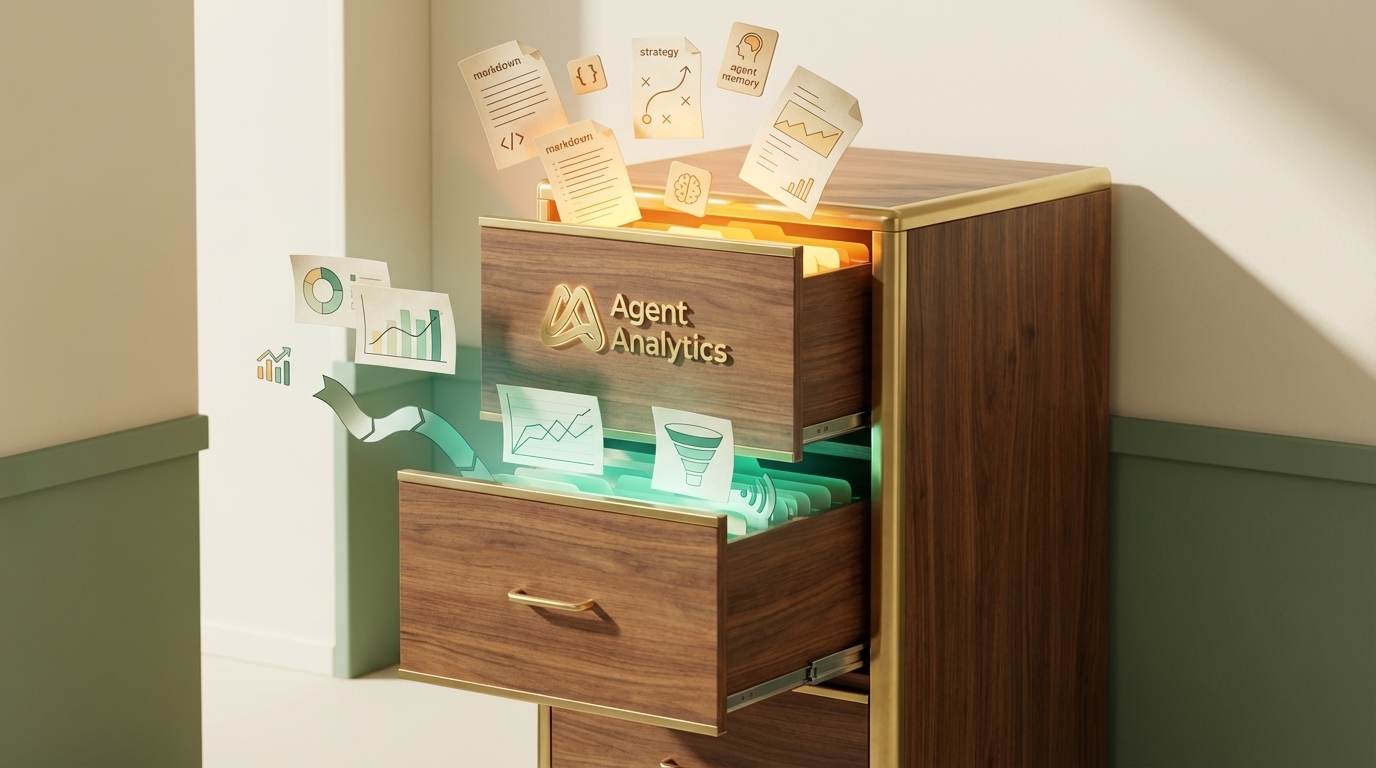
🗄️ Cabinet is an AI-first knowledge base where files live on disk and a team of AI agents helps you execute.
It gives you the operating system: strategy, research, roadmaps, recurring jobs, and agent memory in markdown.
Add agent-readable analytics and 🗄️ Cabinet can answer the most important commercial question:
what did the real user do after you shipped?
That is where 🗄️ Cabinet teams get the next operating upgrade.
Cabinet is where the work compounds. Agent-readable analytics is how you tell whether that work moved a user closer to value.
🗄️ Cabinet organizes the company brain. Agent-readable analytics tracks the outside world.
Cabinet is excellent for internal leverage.
It can keep your roadmap on disk, store market research, schedule recurring jobs, and give your team a shared memory that does not vanish when a session ends.
It even ships with a built-in Data Analyst role.
With agent-readable analytics, your team can finally see:
- which launch actually brought qualified traffic
- which docs page got users to start setup
- which onboarding step caused users to leave
- which change increased signup, activation, or purchase
That is how 🗄️ Cabinet teams connect internal output to real user movement.
The first Cabinet loop to measure is simple
For most 🗄️ Cabinet teams, the first loop is not complicated:
- an agent ships a page, docs change, campaign, or onboarding update
- a real user lands on the product or docs
- they decide whether the setup looks credible
- they sign up or start the install
- they reach a first value moment
- your analyst writes back what changed
That is the real growth loop.
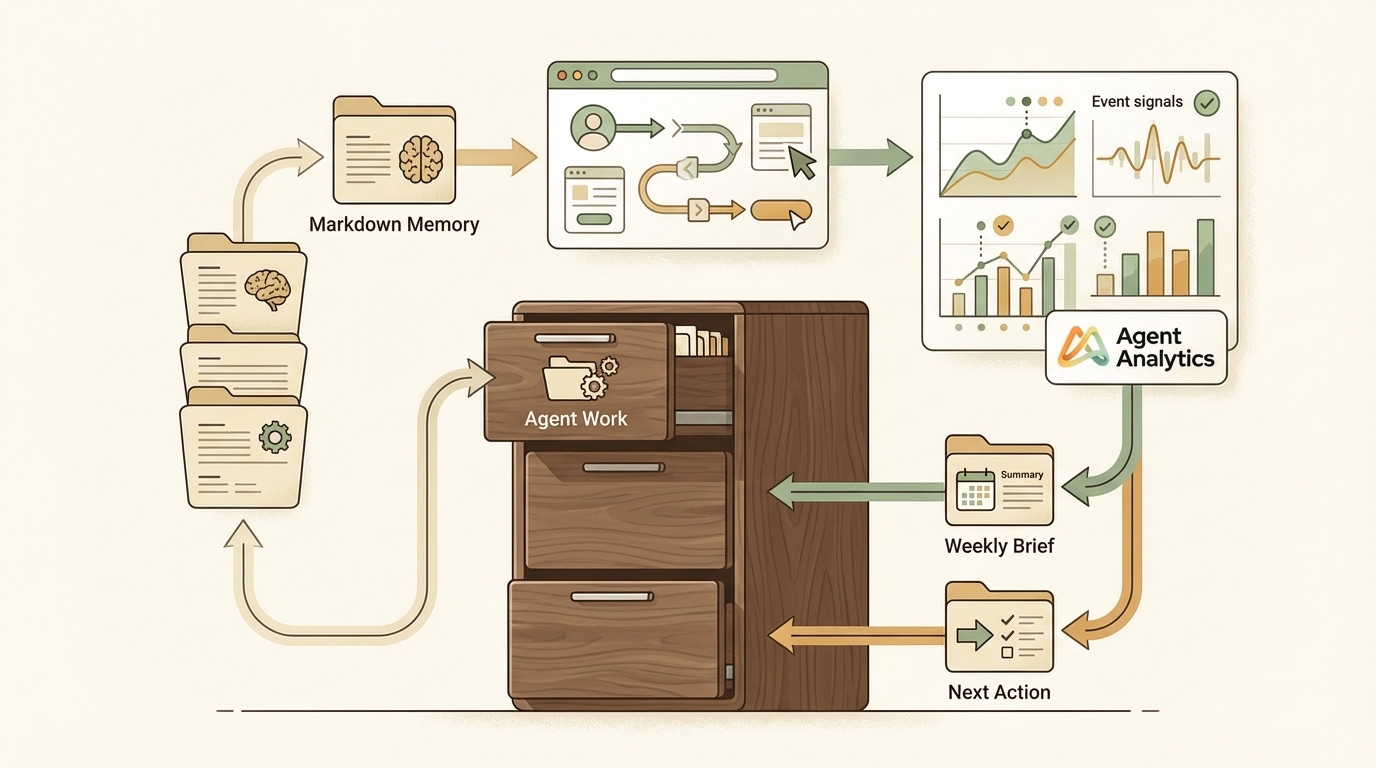
🗄️ Cabinet can store the plan, the research, the launch notes, and the follow-up tasks.
Agent-readable analytics makes the user journey queryable.
Once that happens, your Data Analyst stops summarizing internal activity and starts answering the questions that actually matter:
- what changed after the landing page rewrite?
- which pages drove the highest-intent visits?
- where are users dropping out before activation?
- which launch channels bring users who actually convert?
🗄️ Cabinet philosophy needs an agentic way to measure
🗄️ Cabinet teams already have leverage on execution.
The next upgrade is connecting all that output to what users actually do.
With agent-readable analytics, the team can answer:
- which traffic source brings users who actually activate?
- which docs flow produces serious setup intent instead of empty pageviews?
- which onboarding change improves first-value completion?
- which agent-made change increased signup, retention, or purchase?
This is the operating upgrade.
🗄️ Cabinet is built around memory, delegation, recurring jobs, and work that compounds over time. Agent-readable analytics extends that loop from “page updated” or “brief written” to “user outcome measured” and then “next action assigned.”
That is where agent-readable analytics matters.
Once the data is queryable, the team gets better:
- your Content Marketer can judge a post by qualified intent instead of impressions
- your Product Manager can compare onboarding changes by activation instead of taste
- your Data Analyst can spot where the user journey leaks and hand back the next fix
That is why the strongest 🗄️ Cabinet setup pairs the knowledge base with agent-readable analytics their agents can query and use.
It works in 🗄️ Cabinet out of the box
This part is simpler than it sounds.
If your 🗄️ Cabinet workspace already runs on Codex, use the normal Agent Analytics skill route for Codex.
If your 🗄️ Cabinet workspace already runs on Claude Code, use the normal Agent Analytics skill route for Claude Code.
Once the skill is installed in that agent environment, it works in 🗄️ Cabinet out of the box.
You can ask one of your existing Cabinet agents to run the analytics workflow, or create a dedicated Analyst agent inside Cabinet and let it own the reporting loop.
That is a very natural fit for 🗄️ Cabinet because the result comes back as a markdown report inside the knowledge base.
Not another analytics tab.
Not another dashboard the team forgets to open.
A clean page in Cabinet with headings, bullets, tables, snapshots, and next actions the company can actually use.
Start here
If you want to do this now:
- use the OpenAI Codex install guide if your 🗄️ Cabinet workspace runs on Codex
- use the Claude Code install guide if your 🗄️ Cabinet workspace runs on Claude Code
- read Talk to Your Analytics for the query model behind the workflow
If your company already runs in 🗄️ Cabinet, the clean path is simple: use the same skill install route you would already use for Codex or Claude Code, then let one of your Cabinet agents run the workflow or create a dedicated Analyst agent for it, and keep the weekly insight loop inside the Cabinet workspace as markdown.
🗄️ Cabinet gives you the operating system.
Agent-readable analytics tells your agents whether the operating system is helping real users reach value.
If you run your startup from Cabinet, this is the next obvious layer: measure the user journey, write the answer back into the knowledge base, and let your agents improve the next step.
Related: Analytics Closes the Agent Feedback Loop · Talk to Your Analytics · Best Analytics for AI-Built Side Projects